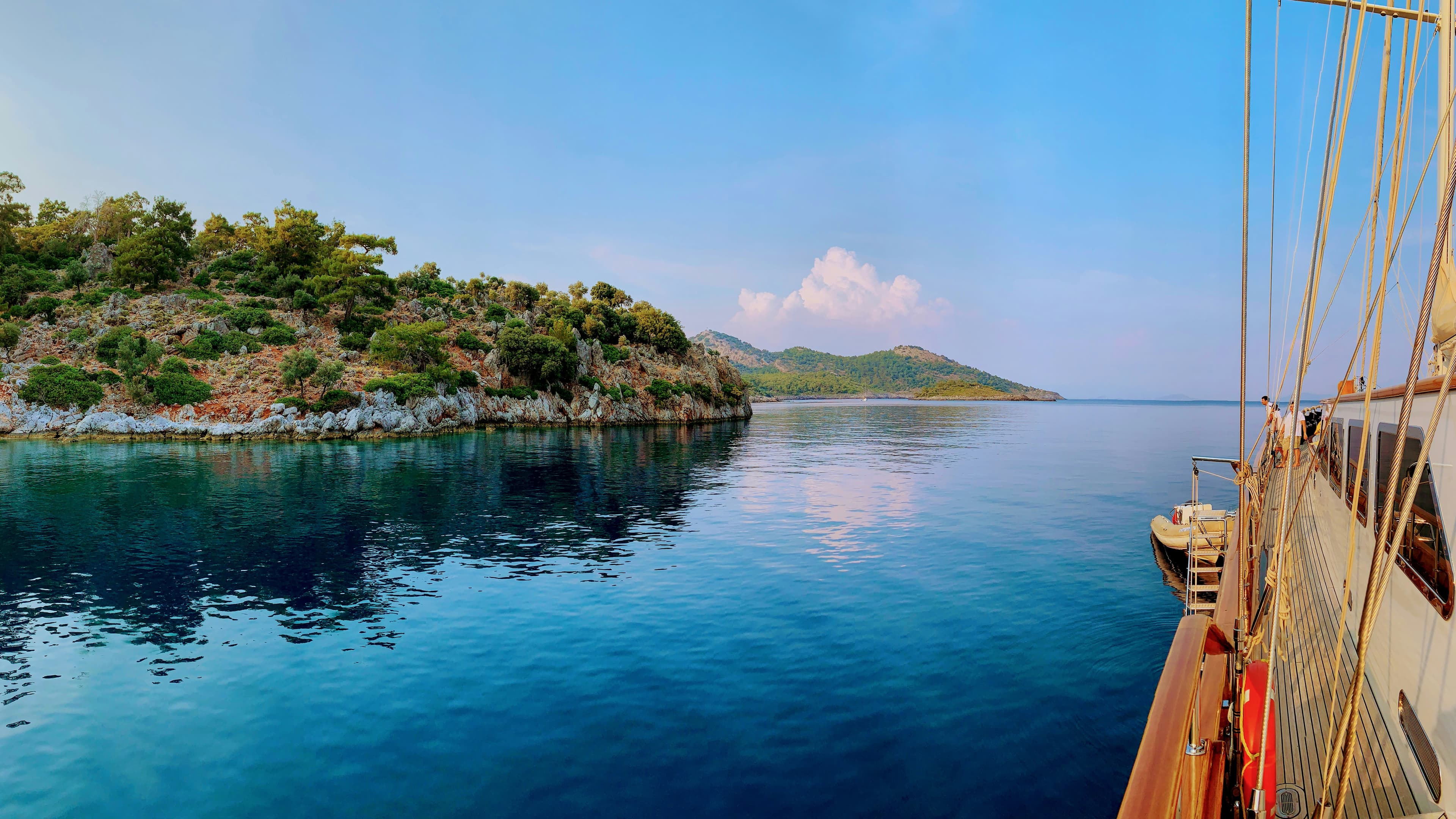
Turkey's Aegean coast is bounded to the north by the Meltemi wind zone, which means the prevailing summer pattern is a north-westerly of Force 4–7 that blows most afternoons. The Turquoise Coast (between Bodrum and Antalya) is more protected — the Bozburun Peninsula and the islands along this coast create a complex network of gulfs and anchorages that provide excellent shelter. Turkish customs requirements are more involved than in the EU; understanding the transit log system before you depart saves time at every port of call.
The Meltemi on the Turkish Coast
The Meltemi (called Imbat locally) runs along the Turkish Aegean coast from June to September, typically Force 4–6 in the afternoon with occasional Force 7 events. The Bodrum Peninsula and the Gökova Gulf are the areas most affected; Marmaris, further south, is more sheltered due to the land mass of the Bozburun Peninsula deflecting the north-westerly flow. Passages north (from Bodrum towards Çeşme or Kuşadası) are upwind against the Meltemi in the afternoon — make them early morning. Passages south are typically fast, reaching and running with the wind.
Gökova Bay
Gökova Bay (Gokova Korfezi) opens east from Bodrum and is 40 miles deep. It offers the best protected sailing on the Turkish coast — the northern shore is steep-to and forested, the southern shore has beaches and occasional villages. Orak Island at the bay entrance and Çökertme on the south shore are reliable overnight anchorages. The bay has minimal commercial traffic and the Meltemi is less strong inside the bay than at the mouth. Depths throughout are suitable for anchoring (10–20m over sand in most bays).
The Transit Log (Gemi Cüzdanı)
Foreign vessels entering Turkey must obtain a transit log from the first port of entry. This document records every port of call and must be presented to the harbour authority (called the kaptan) at each harbour where you stay overnight. The process is straightforward: go to the customs/kaptan's office on arrival, present the transit log, pay any applicable harbour dues, and receive a stamp. Failure to present the log at each port is technically a violation and can result in delays at departure. On departure from Turkey, the log is surrendered at the final port of exit.
Key Anchorages: Pilotage Notes
Bozburun: approach from the south-east — the village is at the head of a narrow inlet, enter slowly. Anchor in 5–10m bow-to the village quay or take one of the gulet moorings. The inlet is sheltered from all directions; an excellent Bora shelter. Ekincik (Dalyan River entrance): anchor in the open bay south of the village; a caretaker will row out to collect the buoy fee. The village boats run trips up the Dalyan River to the Lycian rock tombs. Kekova: national monument area — anchoring is prohibited over the underwater ruins. Use the approved anchorage buoys to the south of the sunken city.
Frequently Asked Questions
Q: Can I sail between Turkey and the Greek islands?
A: Yes, subject to passport and visa requirements. EU citizens can enter Turkey visa-free for up to 90 days. You must check out of Turkey at a port of entry (Bodrum, Marmaris, Çeşme) and then check into Greece at a designated port of entry (Kos, Rhodes, Samos). The crossing is typically 10–20 miles. The transit log is surrendered on departure from Turkey; Greek customs and port police will stamp your vessel documents on entry to Greece.
Q: Are the gulet anchorages and floating restaurants free?
A: The small restaurants on floating pontoons in places like Gökova Bay and Bozburun typically offer free mooring to boats that eat with them — an informal arrangement that works well for both sides. Anchor free in most Turkish bays unless signs indicate otherwise. National park areas (Ölüdeniz, Gökova) charge entrance and anchoring fees, typically €5–10 per night paid to a collecting boat that comes alongside.