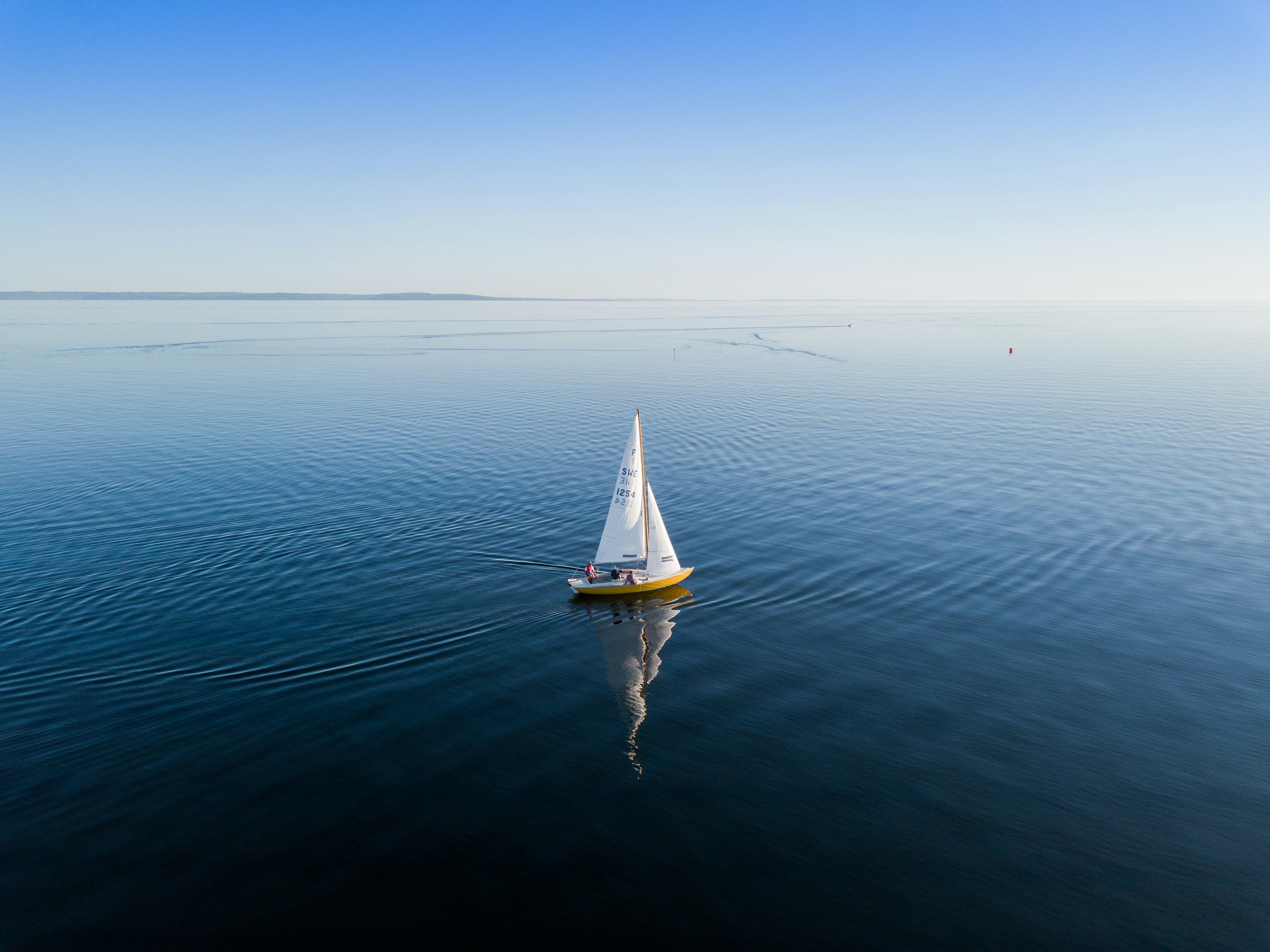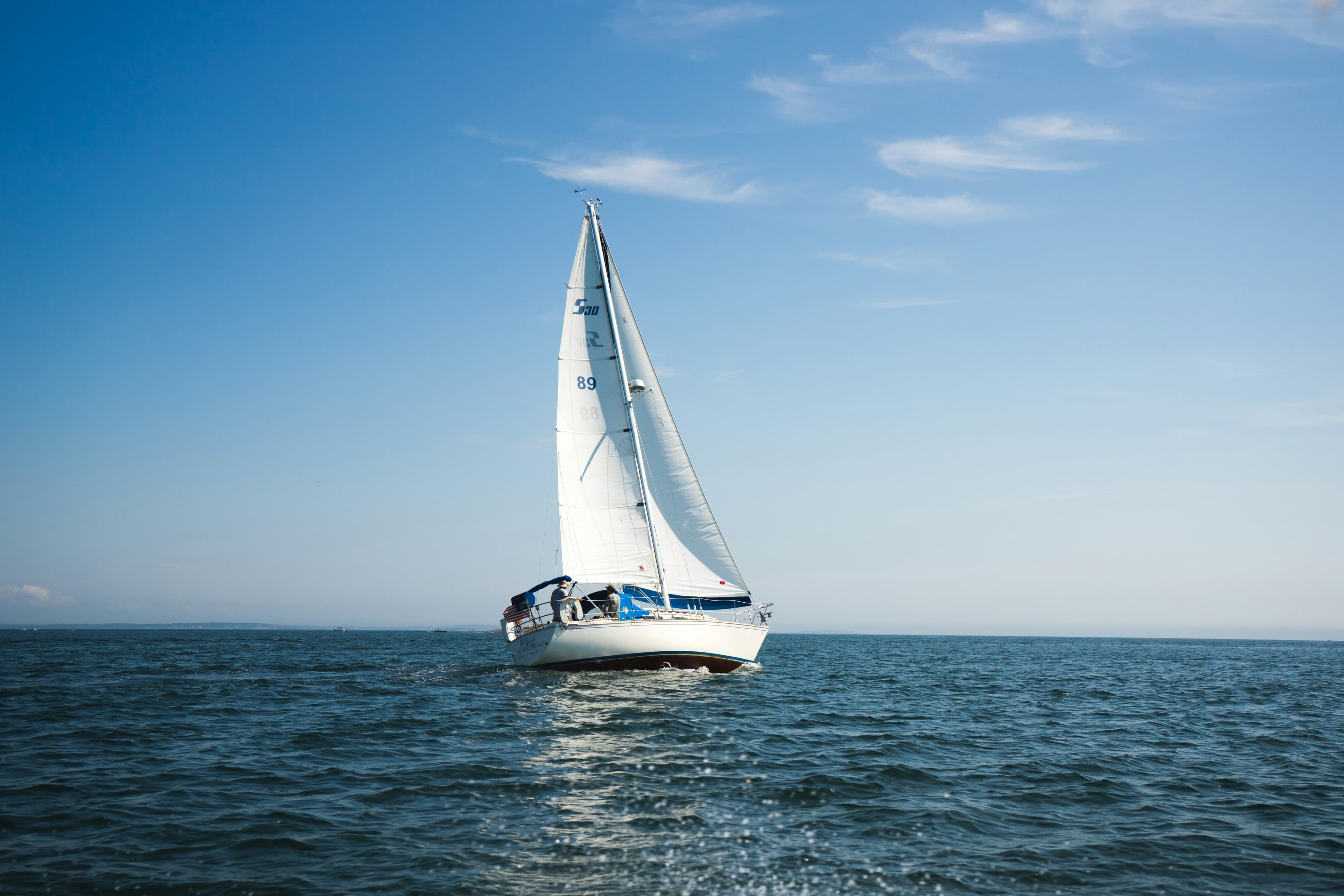
The choice between a catamaran and a monohull shapes your entire charter experience — how the boat moves through the water, how much space you have below decks, how much you pay, and how the sailing actually feels. Neither is objectively better; each suits different priorities. This guide sets out the differences so you can make the right choice for your trip.
Space and Comfort
On space, catamarans win easily. A 42ft catamaran has two hulls, each containing a cabin with its own heads and shower, plus a main saloon significantly larger than anything on a monohull of the same length. The cockpit seats eight people comfortably and the trampoline forward gives sunbathing space with no equivalent on a monohull. For a family with children, or a group of four couples who want private cabin-and-heads arrangements, the practical case for a catamaran is hard to argue with.
A 45ft monohull has one hull, three or four cabins — one of which is usually the forward sail locker in all but name — and a saloon that gets cramped at mealtimes with more than four adults. On pure living space, there is no comparison.
Stability follows the same pattern. Catamarans do not heel — they sail upright, which means flat surfaces, easier cooking, better sleeping underway, and a crew who arrives at the next anchorage without the glazed expression that comes from six hours on a forty-degree slope. For passengers who are new to sailing or prone to seasickness, this matters enormously.
Sailing Performance
Modern charter monohulls — Beneteau Oceanis, Jeanneau Sun Odyssey, Bavaria Cruiser — are designed for charter use: forgiving, easy to handle, reliable. They sail well in most conditions and handle heavy weather better than a catamaran of equivalent length. Upwind performance in a seaway is typically stronger; monohulls punch through chop where a catamaran slaps and hobby-horses between the waves.
Charter catamarans — the Lagoon 42 and 46 dominate the Mediterranean fleet — are not performance machines. They are wide, relatively heavy, and shaped for comfort rather than speed. On a beam reach in 15 knots they are excellent. Upwind in 25 knots, they are hard work. Most experienced bareboat sailors find them easier to handle under engine in tight marinas than a monohull of similar length, because twin engines give precise control — but manoeuvring a 24ft-wide catamaran in a busy Greek port on a gusty afternoon is its own skill.
For sailors who want to feel the boat sail — who want to trim sails, feel the helm respond, and engage with the physics of what the wind is doing — a well-set-up monohull remains the more satisfying experience.
Cost
Catamarans cost more. A comparable week's charter on a 42ft catamaran runs 40–60% more than a 40ft monohull at the same destination and time of year. In the Ionian in high season, that means roughly €3,500–€5,000 for the catamaran versus €2,000–€3,200 for the monohull. The security deposit is also higher.
For a group of eight splitting the cost, the per-person difference narrows considerably and the space argument becomes compelling. For a couple or four people, the monohull offers better value unless the comfort premium is specifically what you are paying for. Marina fees are also higher for catamarans — charged by beam, and a catamaran's beam is considerable.
Anchorages and Shallows
Catamarans draw less water than most monohulls — typically 1.0–1.3m versus 1.8–2.2m for a keel yacht. In the Mediterranean and Caribbean, where shallow anchorages in turquoise water are the point of the trip, this matters. A catamaran can anchor in 2m of water that a monohull cannot safely approach.
The width that creates marina headaches also limits access to smaller harbours. In the Ionian, many of the most characterful village quays — Fiskardo on Kefalonia, Gaios on Paxos — are inaccessible or very tight for a catamaran. A monohull slips in without trouble.
Which Should You Choose?
Choose a catamaran if: your group prioritises comfort and space, you have passengers who are new to sailing or prone to motion sickness, you want separate cabin-with-heads arrangements for each couple, or you are chartering in a destination with shallow anchorages.
Choose a monohull if: your group are primarily sailors who want to engage with the sailing, you are chartering on a tighter budget, you want access to smaller harbours and village quays, or your itinerary includes significant windward work or passages in mixed conditions.
One practical point: if this is your first bareboat charter, consider which hull type your qualifications were earned on. Handling a 42ft catamaran in a marina without prior catamaran experience is achievable but adds a variable you do not need on your first independent charter. Many operators run familiarisation sessions — worth doing if you are switching hull types. Read our bareboat charter guide →
Frequently Asked Questions
Is a catamaran harder to sail than a monohull?
In open water, catamarans are generally easier — they do not heel and the motion is more comfortable. In tight marinas and anchorages, the width requires more attention. Upwind in strong winds, monohulls perform better and feel more manageable. Most sailors find the overall learning curve broadly similar.
Do I need different qualifications to charter a catamaran?
Your Day Skipper or Coastal Skipper qualification covers both hull types. Some operators ask for a catamaran endorsement or specific catamaran sea miles for larger vessels — check with the charter company before booking. A catamaran familiarisation session on arrival is a sensible investment if you have only sailed monohulls.
Are catamarans safer than monohulls?
Both types are safe in the hands of a competent skipper. Catamarans are more stable in moderate conditions and do not carry the same knockdown risk as a monohull in severe weather. In the context of normal charter sailing, this distinction rarely becomes relevant.
Which is better for families with young children?
Catamarans. The stable platform, large cockpit, and flat deck make them significantly safer and more comfortable for young children. The separate cabin arrangements also give parents privacy when children sleep. For families, the catamaran premium is generally money well spent.
How much more does a catamaran charter cost?
Typically 40–60% more than a comparable monohull in the same destination and season. Split across a group of six or eight, the per-person difference becomes modest. For a couple or group of four, the monohull offers considerably better value unless space is the primary requirement.